Introducing ‘Every Moment Is New,’ a song about the profound freedom of presence. This track is a gentle invitation to lay down the burdens of the past—the mistakes, the worries, and the old narratives—and embrace the blank canvas of your immediate experience.
“Let the echoes go on a quiet breath, and find your peaceful step toward the light.” [Frank Conn]
Lyrics:
(Verse 1) The curtain falls on yesterday’s scene, the memory starts to blur The mistakes we made, the places we’ve been, the lessons that we learned. We carry the weight of the last hour’s sigh, the echoes of a thought But look at the light in the open sky, the freedom you have bought By simply closing your hand on the past, and letting the grip go free You don’t need a map, you don’t need a cast, you just need to turn and see.
(Chorus) Every Moment Is New. A blank canvas waiting for you. You shed the old skin, and let a new soul bloom. No history to haunt, no shadow in the room. You simply begin again with the breath, As if you “know nothing” about the moment before. You’re standing at the threshold of life and death, And knocking on a brand new door.
(Verse 2) The mind is a collector of dust and rust, of worries long outworn It trades in the currency of mistrust, from the day that you were born It tells you a story of what’s coming next, or what you should have done But the body remembers the simple text: This moment has just begun. The air filling up your lungs is pure, it never breathed for the past It offers a silent, gentle cure, a truth that’s meant to last.
(Chorus) Every Moment Is New A blank canvas waiting for you You shed the old skin, and let a new soul bloom No history to haunt, no shadow in the room You simply begin again with the breath, As if you “know nothing” about the moment before. You’re standing at the threshold of life and death, And knocking on a brand new door.
(Bridge) Forget the score, forget the name, forget the role you played Let go of the needing, let go of the shame, don’t let your heart be swayed By the tired, old voice that wants to define who you are or what you lack There’s nothing to prove, there’s nothing to climb, there’s only the forward track Of a second hand ticking, a light turning green, a clean slate washed in dew It’s the most radical, simple thing, and it’s always waiting for you.
(Chorus) Every Moment Is New. A blank canvas waiting for you. You shed the old skin, and let a new soul bloom. No history to haunt, no shadow in the room. You simply begin again with the breath, As if you “know nothing” about the moment before. You’re standing at the threshold of life and death, And knocking on a brand new door.
(Outro) With the breath… You start again… Every moment is new. Again…
“Look to this Day! For it is life, the very life of life. In its brief course Lie all the verities and realities of your existence: The bliss of growth, The glory of action, The splendor of beauty, For yesterday is but a dream, And tomorrow only a vision, But today well lived makes every yesterday A dream of happiness, and every tomorrow A vision of hope. Look well, therefore, to this Day! Such is the salutation of the dawn.
“The Sutra “Salutation to the Dawn” is widely and frequently attributed to the Classical Sanskrit author Kalidasa.
Screenshot
Pure Innocence: Avaleigh (2 years old) and a Japanese boy, hand-in-hand, walked along the beach in Hososhima, Japan on May 15, 2025. Our daughter spontaneously approached the older boy, took his hand, and led the way. His joyful willingness to join her beautifully captured the simple, unconditional love that can blossom between two complete strangers.
“The central message of the poem is the importance of living fully in the present moment. It emphasizes focusing on the opportunities and realities of the current day, rather than dwelling on the past or worrying about the future.”
Inspired by Conversations with Linda Jayne- Henrik [founder ElephantTribe.org]
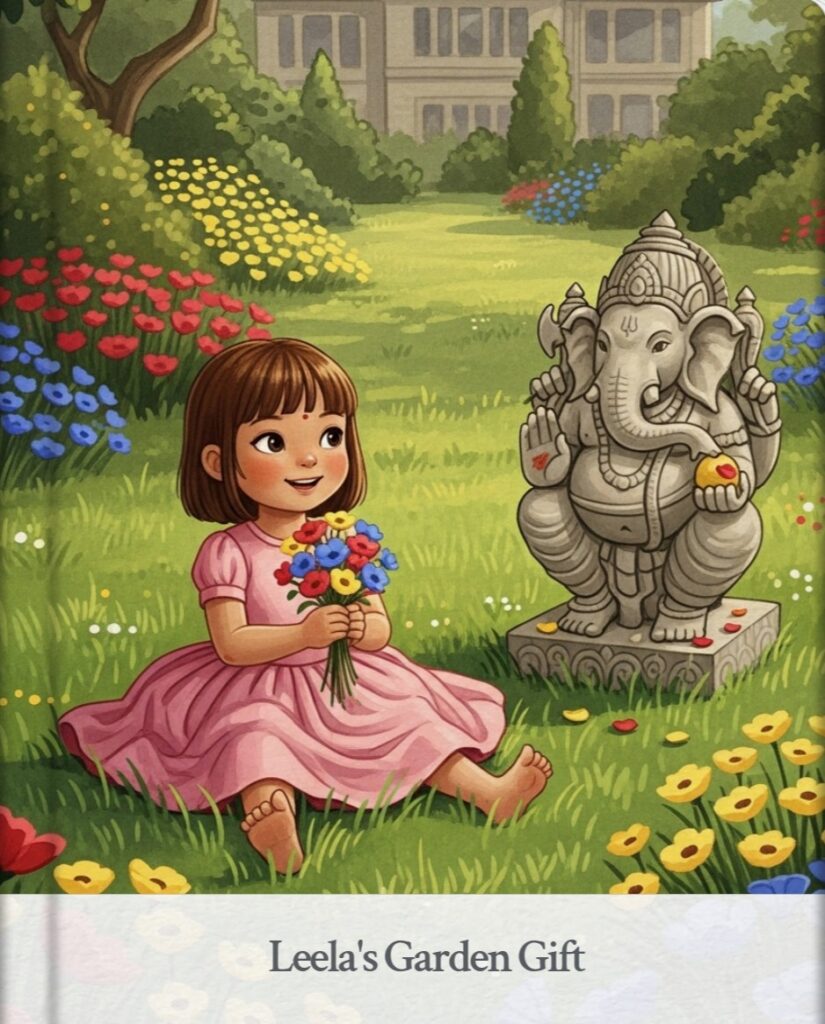
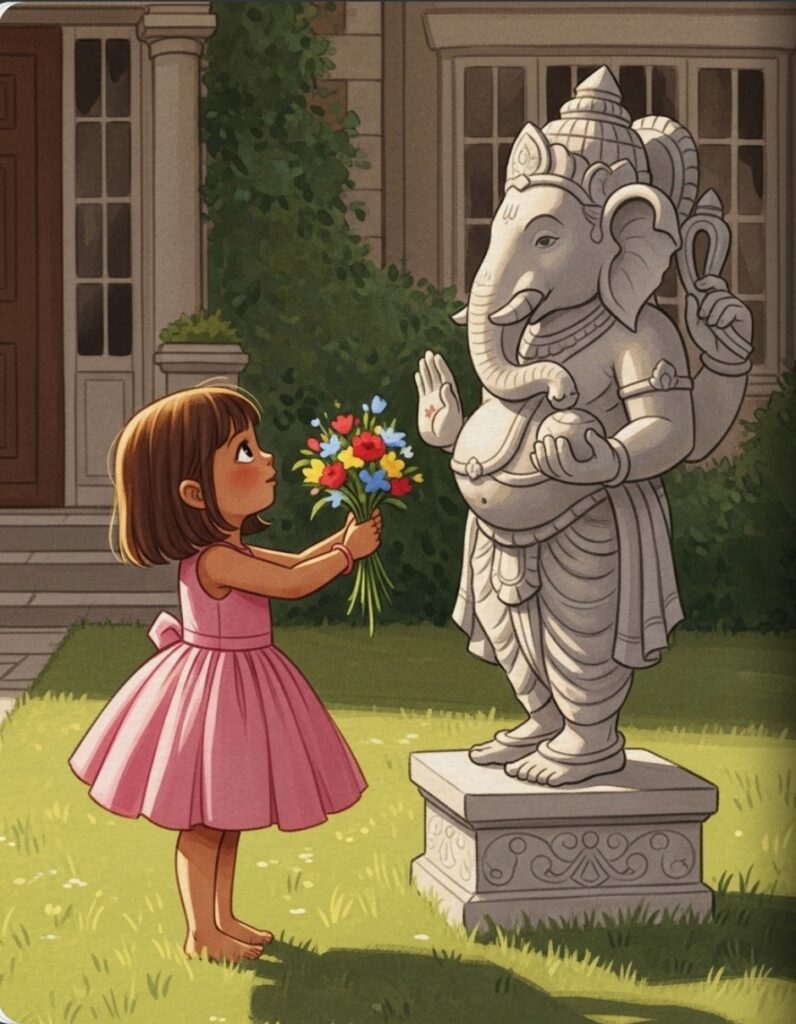
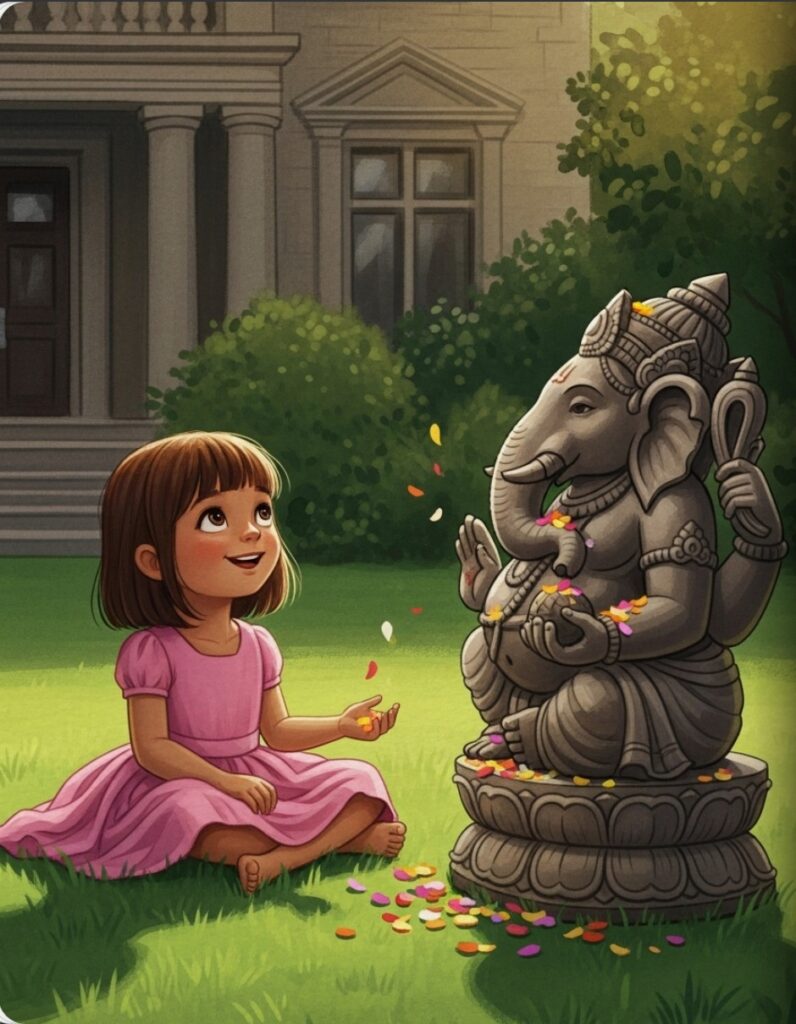
On a bright, sunny morning, Leela’s Garden Gift tells the story of a joyful little girl named Leela, who carefully gathers colorful flowers to create a special present for her beloved elephant statue, Ganesh.
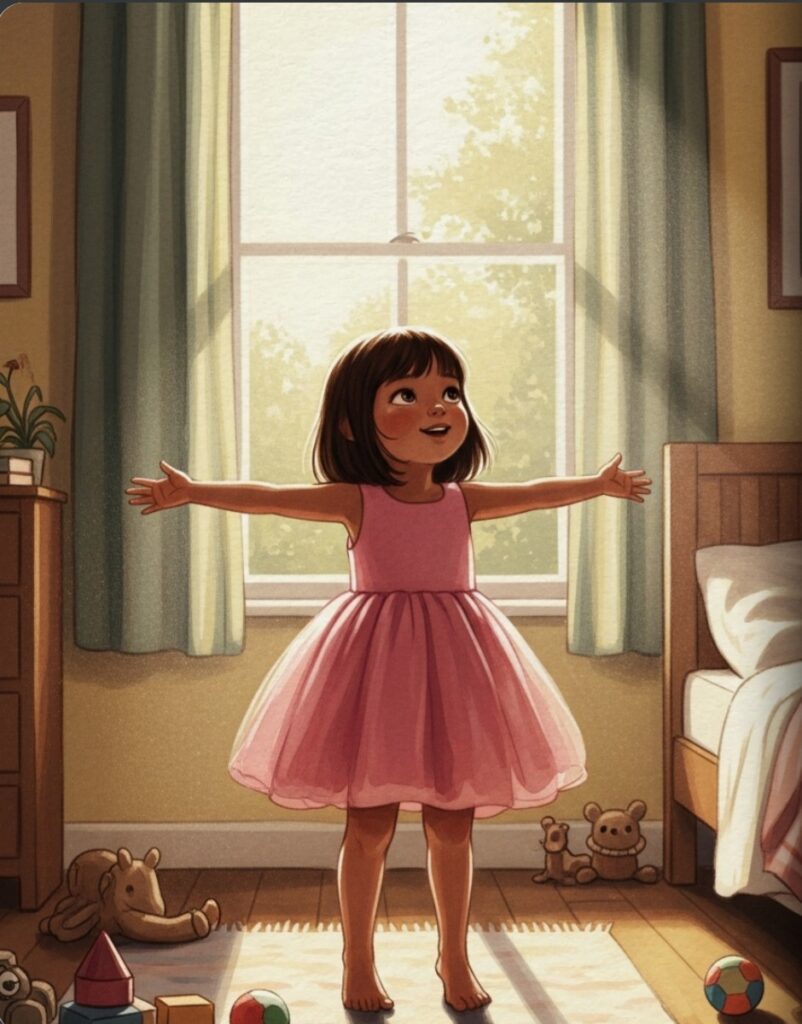
Leela woke up and saw the bright sun. “Good morning!” she chirped. She put on her favorite swirly, twirly pink dress. It was a perfect day to play.
Tippy-toe, tippy-toe, out to the garden she went. The grass was soft and green under her little feet. “Hello, garden!” Leela sang.
The garden was full of colors. Red flowers, yellow flowers, and blue flowers, too! “Ooooh, so pretty!” whispered Leela, her eyes wide with wonder.
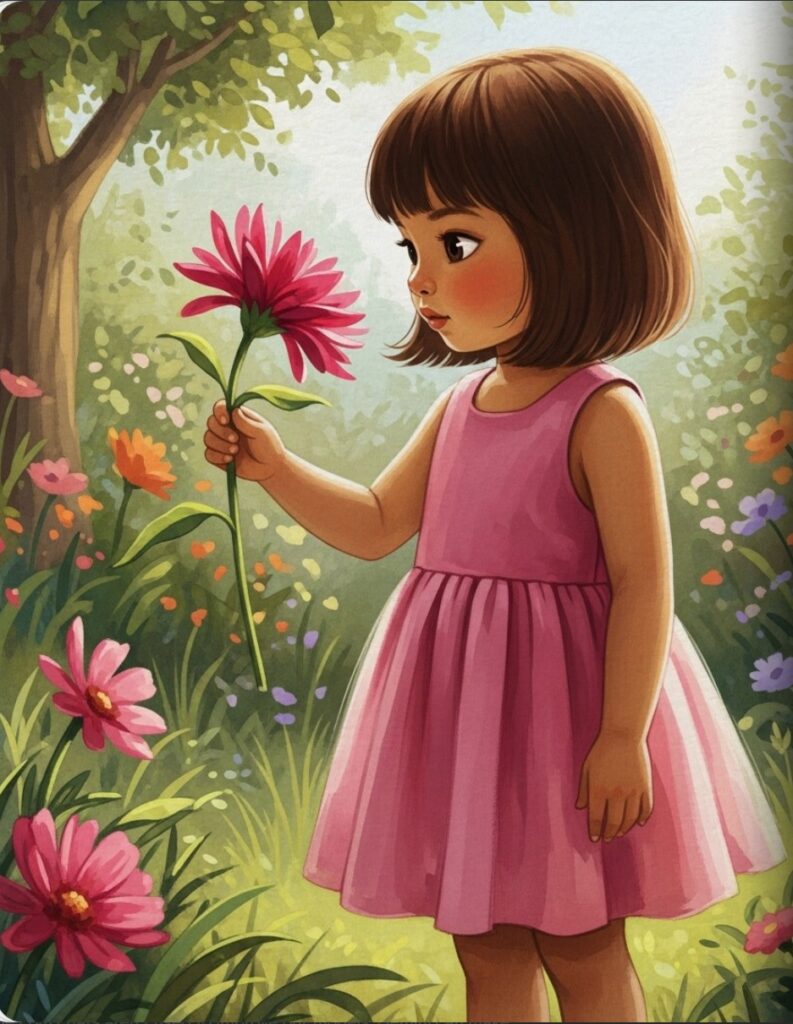
Leela wanted to give a present. First, she gently picked a bright red flower. Pluck! One flower for her present.
Next, she picked a sunny yellow flower. Pluck! It tickled her nose. “A-a-achoo!” she giggled. Two flowers for her present.
Then, she picked a sleepy blue flower. Pluck! Her hands were getting full of colors!
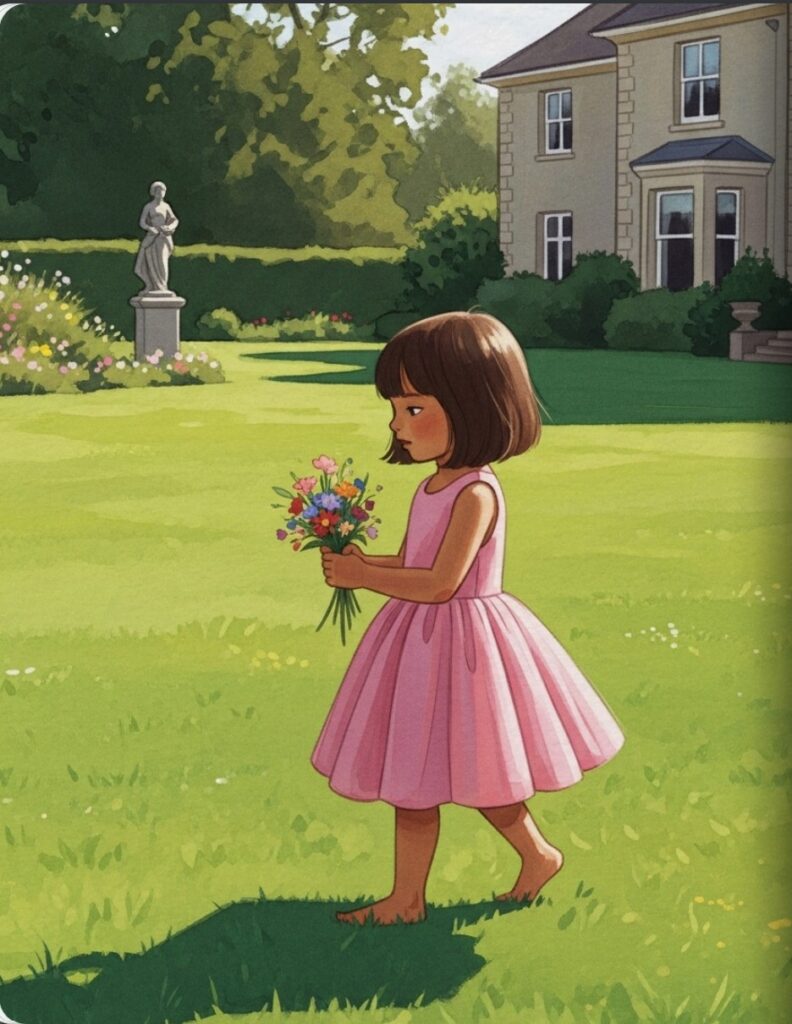
With her beautiful present, Leela walked to the front of the big house. A special friend was waiting for her there.
“Hello, Ganesh!” she said to the kind elephant statue. “I have a present for you.”
She sprinkled the colorful petals all around. Red petals, yellow petals, and blue petals fell like soft rain.
The statue looked so happy and bright! Leela clapped her hands. Giving her garden gift made her heart feel full of sunshine.
In Tibetan Buddhism, the Four Immeasurables prayer is a series of four powerful statements used in meditation to cultivate a wish for the well-being of all sentient life.
This profound new track features the sacred Green Tara Mantra, guiding you into deep Meditation and tapping into the wisdom of the Heart. #DalaiLama #Music #Mantra #Compassion
We are thrilled to announce the release of our newest MANTRA and accompanying visual experience, “MINDFULNESS: The Gift of Presence,” now available on YouTube and Instagram!
In a world that constantly pulls us toward the next thing, the past, or the future, it’s easy to forget the simple power of the here and now. This piece is not just a song; it’s a sonic mantra—a gentle reminder and a vibrational tool designed to help you pause, take a deep breath, and recenter your awareness.
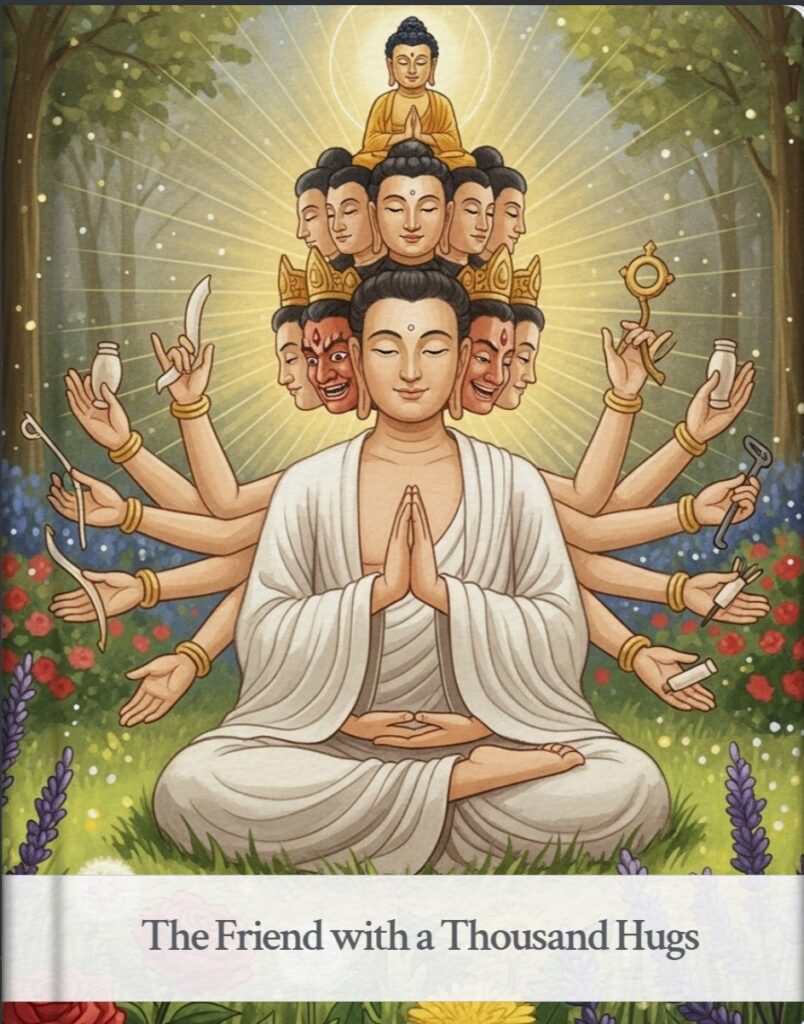
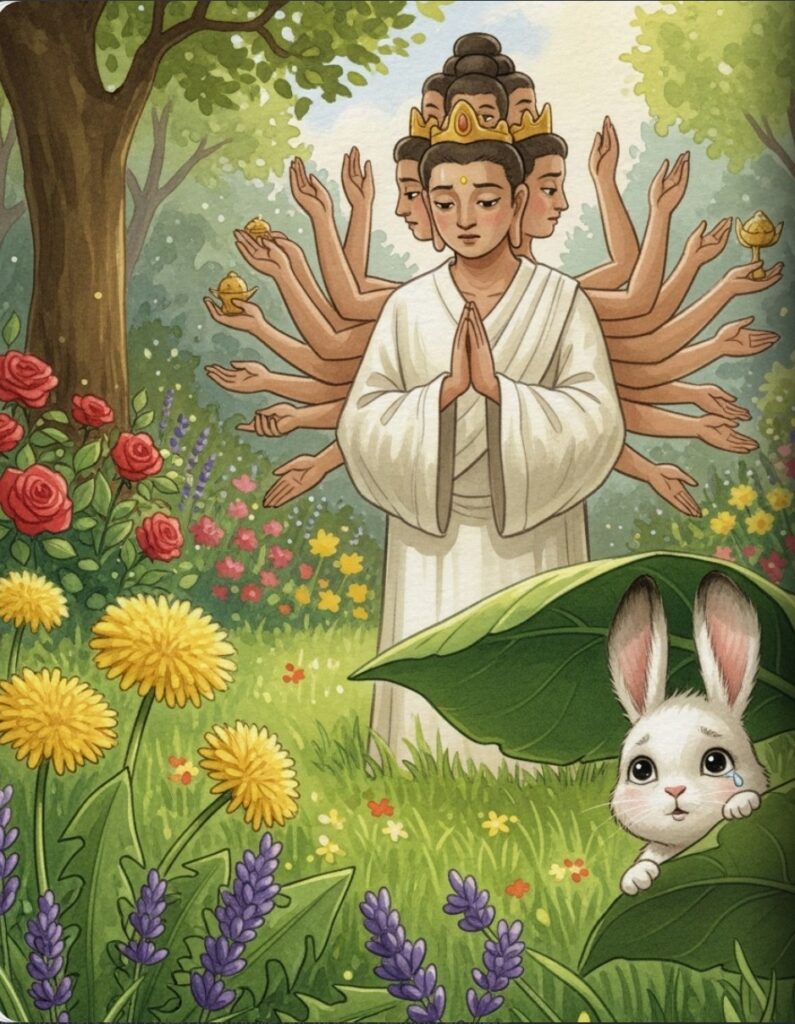
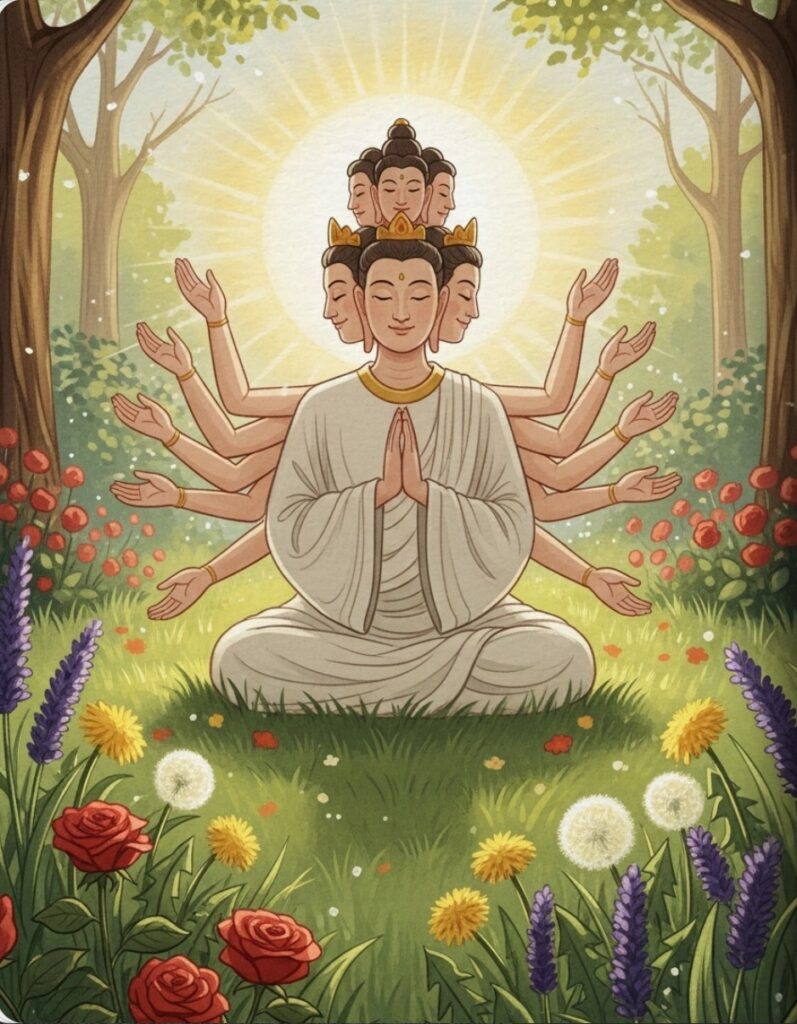
A new retelling of an ancient Indian fable introduces a new generation to the timeless wisdom embodied by the Eleven-Headed Avalokitesvara, Bodhisattva of Compassion. Read the complete book with rich colorful illustrations below.
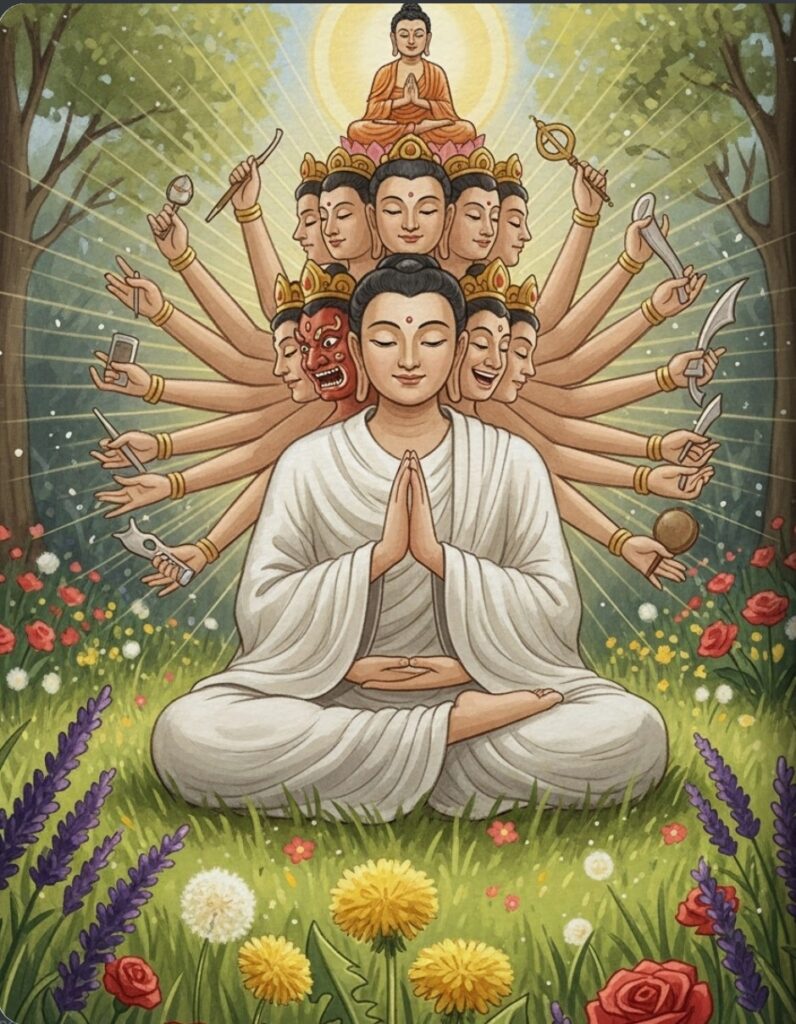
In a sunny, sparkly garden lived the kindest friend you could ever meet. His name was Avalo. He was very special. He had eleven friendly faces to smile with, and a thousand arms to give the best hugs!
One morning, Avalo saw a little bunny named Asha hiding behind a leaf. Asha was very sad, and a little tear rolled down her fluffy cheek. “Oh dear,” whispered one of Avalo’s faces. “Our friend needs help.”
Avalos’ gentle faces looked at Asha. They whispered like the wind in the leaves, “It’s okay, little bunny. We are here for you.” These faces helped Avalo think of soft, kind things to do.
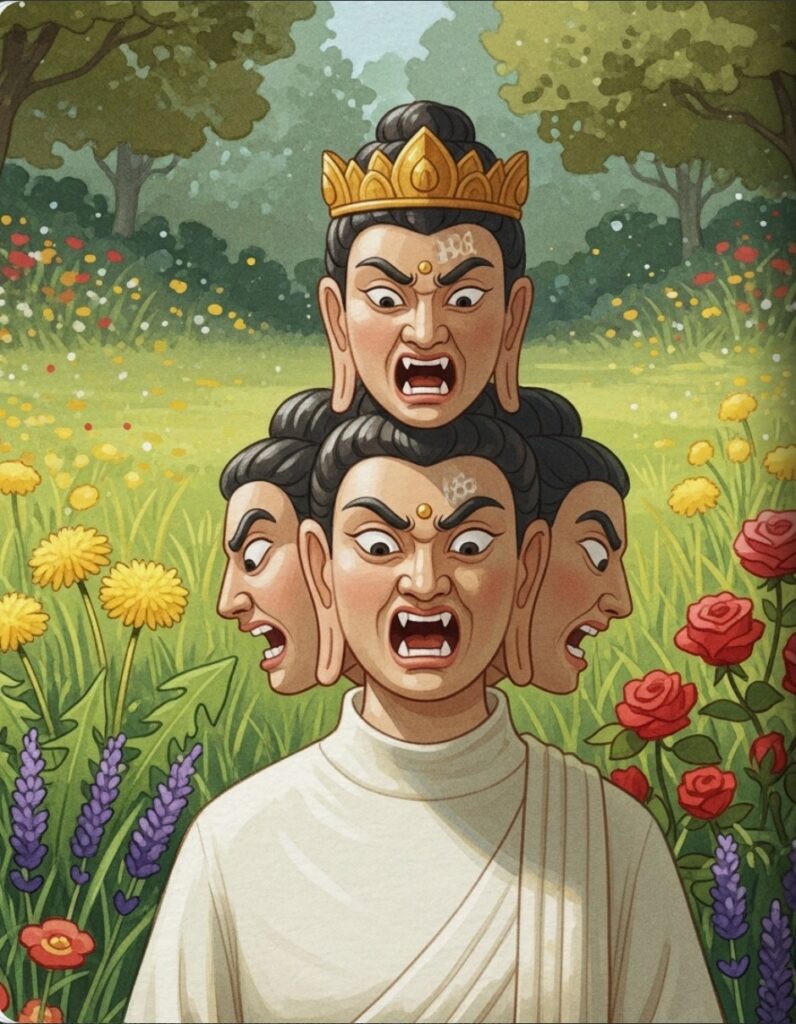
But what if a grumpy feeling was making Asha sad? Avalo had special faces for that! His louder faces would make a silly, scary face and shout, “Go away, grumpy thoughts! Shoo, shoo!”
But what if a grumpy feeling was making Asha sad? Avalo had special faces for that! His louder faces would make a silly, scary face and shout, “Go away, grumpy thoughts! Shoo, shoo!”
Even Avalo’s loud faces were full of love. They were like a super-protector, scaring away anything that might bother his friends. Deep inside, his heart was always kind.
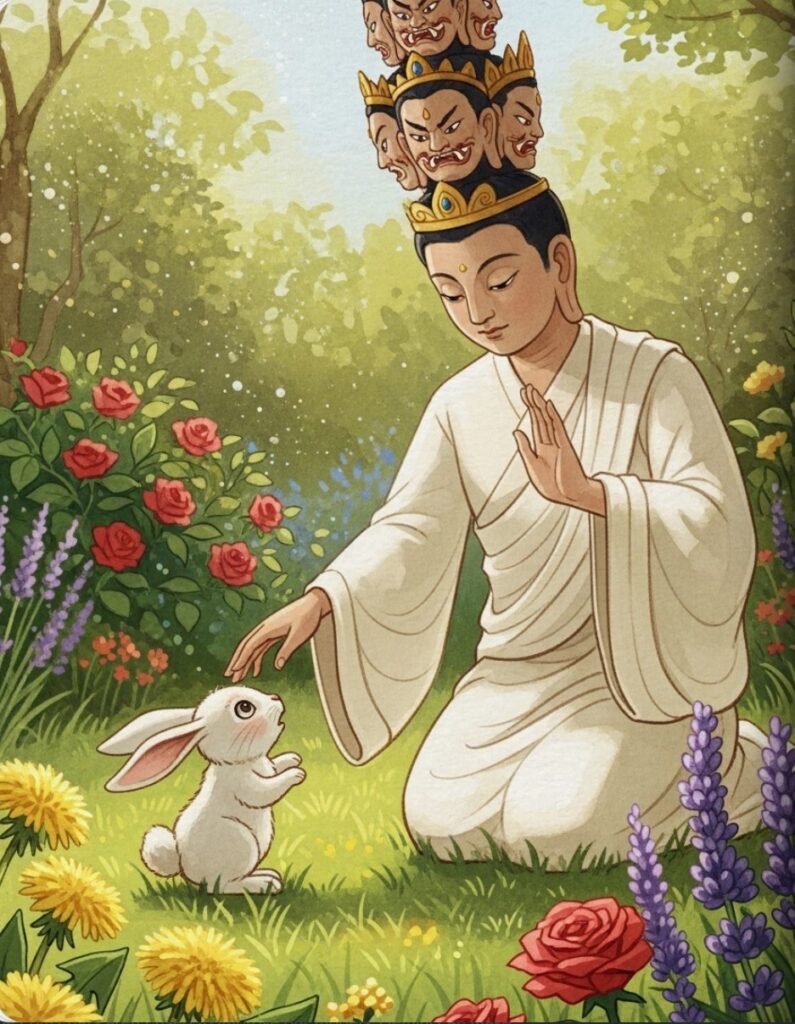
Right at the very top, Avalo had his calmest, wisest face. It was always peaceful, like the quiet stars at night. This face always knew the right thing to do to make someone feel better.
One of Avalo’s hands reached out and gave Asha a bright yellow dandelion. Another hand gently wiped her tear away. A third hand gave her a soft pat on the back, saying “There, there.”
Asha sniffled and then giggled! She held the sunny flower and wiggled her nose. The grumpy feelings were all gone. All eleven of Avalo’s faces smiled a big, happy smile.
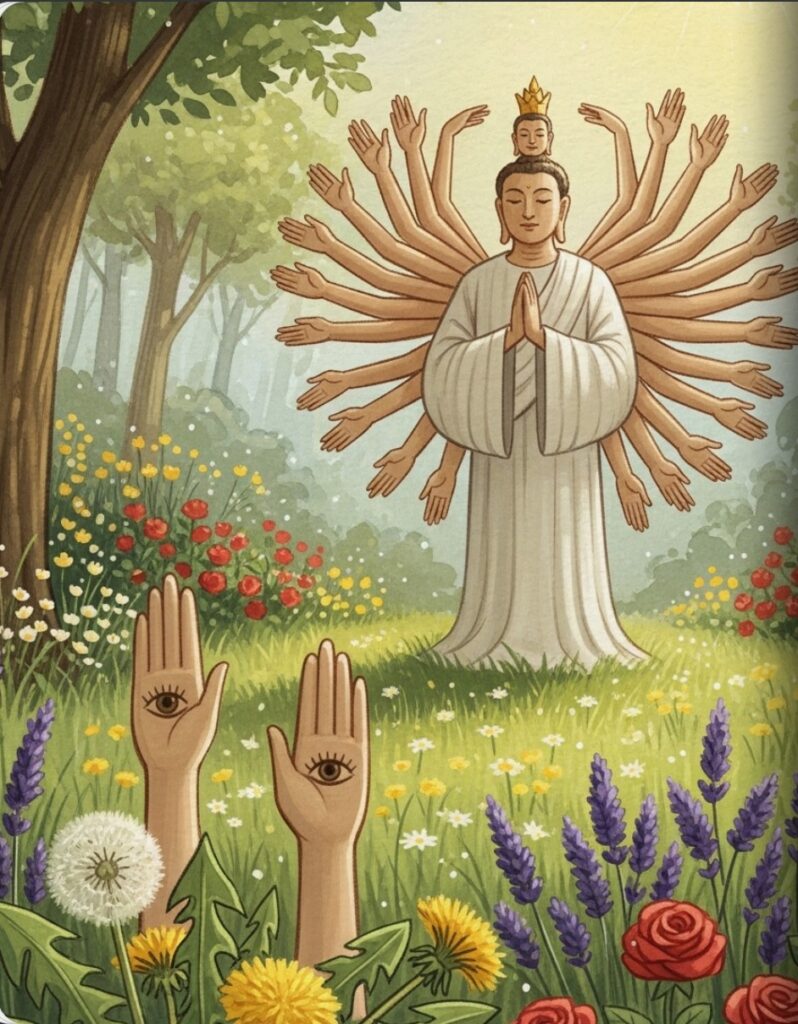
With eleven faces full of care and a thousand arms to always share, Avalo is the best friend in the whole wide world. He has enough love and hugs for everyone.
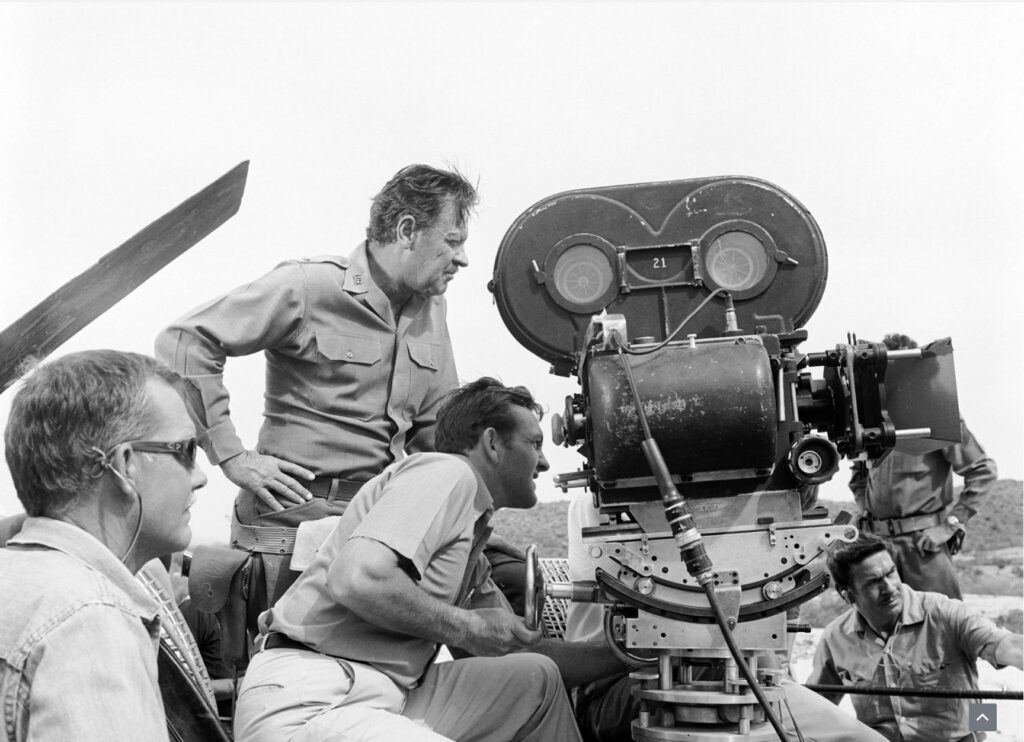
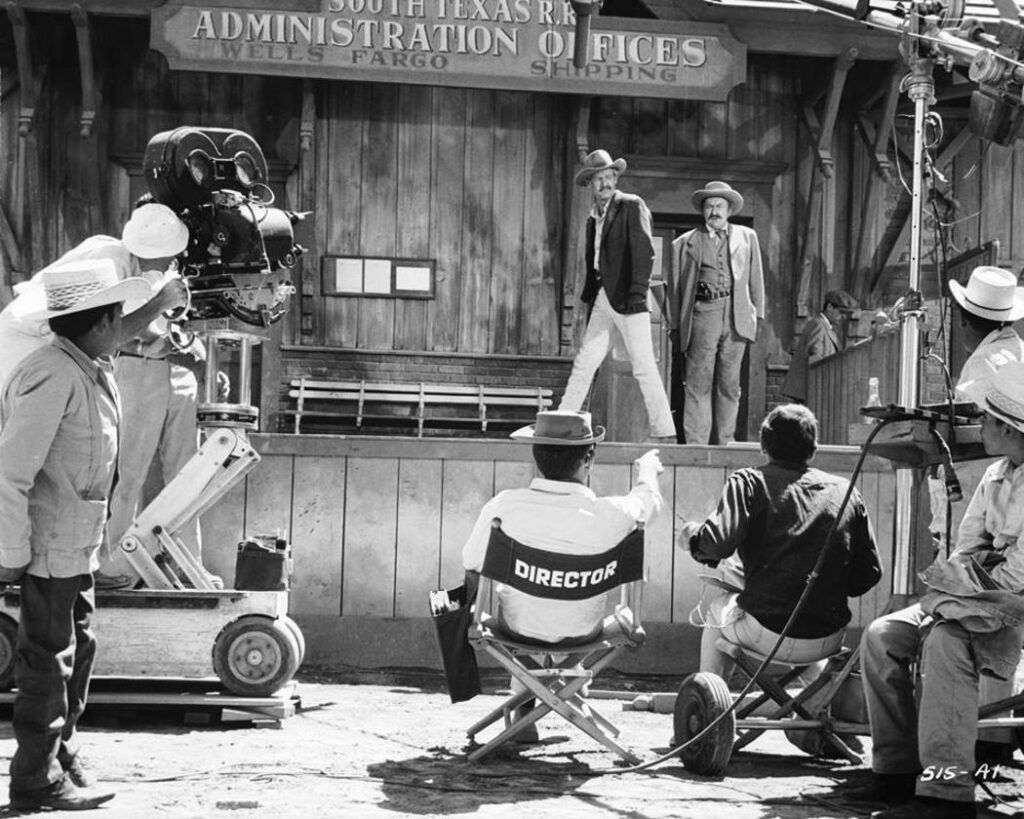
The primary objective of this analysis is to deconstruct The Wild Bunch from a production-oriented perspective, emphasizing its technical craft and including a focused examination: “ (*) Detailed Analysis: Editing—The Blend of Long and Short Cutting”.
The film’s 1969 opening sequence represents a masterful application of revisionist Western cinematography. Functioning as an immediate statement of formal intent, the sequence technically establishes the movie’s core thematic infrastructure: the uncompromising depiction of brutal, chaotic violence and the definitive dissolution of the romanticized frontier narrative. This immediate immersion places the viewer within a morally ambiguous diegesis, framed by the symbolic representation of the Pinkerton man and the conflict with Eastern financial interests.
Mise-en-Scène: Setup and Symbolism
The sequence begins with the titular gang, disguised as U.S. Army soldiers, riding into the dusty, sun-baked Texas border town of Starbuck.
* Setting as Irony: The town is hosting a Temperance Union parade, with well-dressed citizens singing a hymn, juxtaposed against the arrival of the heavily armed outlaws. This contrast immediately establishes the theme of the Old West’s decline and the clash between civilized order and raw lawlessness.
* The Scorpion and Ants Metaphor: Before the main action, the camera focuses on a group of children gleefully watching scorpions being tormented and consumed by a swarm of fire ants inside a circle of stones. This symbolic action is a chilling piece of visual foreshadowing, visually representing the doomed, surrounded gang (the scorpions) and the overwhelming, brutal forces closing in (the ants and bounty hunters). The children’s detached cruelty underlines the film’s unflinching look at inherent human violence.
* Blocking and Staging: The arrival of the Bunch, led by Pike Bishop (William Holden), is staged with an air of deliberate, slow tension. They ride past the crowd in a measured pace, which is later contrasted with the sudden, explosive chaos of the shootout. The placement of Deke Thornton (Robert Ryan) and his bounty hunters on the rooftops (high-angle perspective) establishes them as an omniscient, predatory presence, visually caging the Bunch even before the first shot is fired.
Cinematography: Pacing and Perspective
Cinematographer Lucien Ballard employs a style that builds tension through observation, then explodes into violent action.
* A-roll and B-roll: During the initial ride-in, the camerawork is relatively smooth, using medium shots and medium long shots to establish the characters and their environment. The wide shot of the men riding into town emphasizes their isolation and the vast, unforgiving landscape. The use of freeze frames during the opening credits, stopping on key character faces, draws attention to their worn, stoic expressions, a technique that would become a Peckinpah signature.
* The Gunfight: Once the shooting starts, the cinematography becomes hyper-kinetic. The camera utilizes rapid pans, quick zooms, and handheld (or simulating handheld) movement to convey the chaos and confusion of the gunfight, plunging the viewer directly into the fray. This shift in cinematic language is highly destabilizing.
* Deep Focus/Rack Focus: While hard to verify without a close viewing, Peckinpah often utilizes moments of deep focus to keep both the action in the foreground (the Bunch) and the threat in the background (the bounty hunters/civilians) in sharp relief, emphasizing the layered danger.
Editing: The Grammar of Violence (*)
The editing, overseen by Lou Lombardo, is perhaps the most revolutionary and technically significant aspect of the scene, forever changing the presentation of cinematic violence.
* Rapid-Fire Cutting: The most striking feature is the extremely short average shot length (ASL) during the shootout—sometimes less than two seconds—resulting in an overwhelming barrage of images. This technique of super-rapid montage creates a sense of unrelenting, non-linear chaos that mirrors the adrenaline and disorientation of a real-life gunfight.
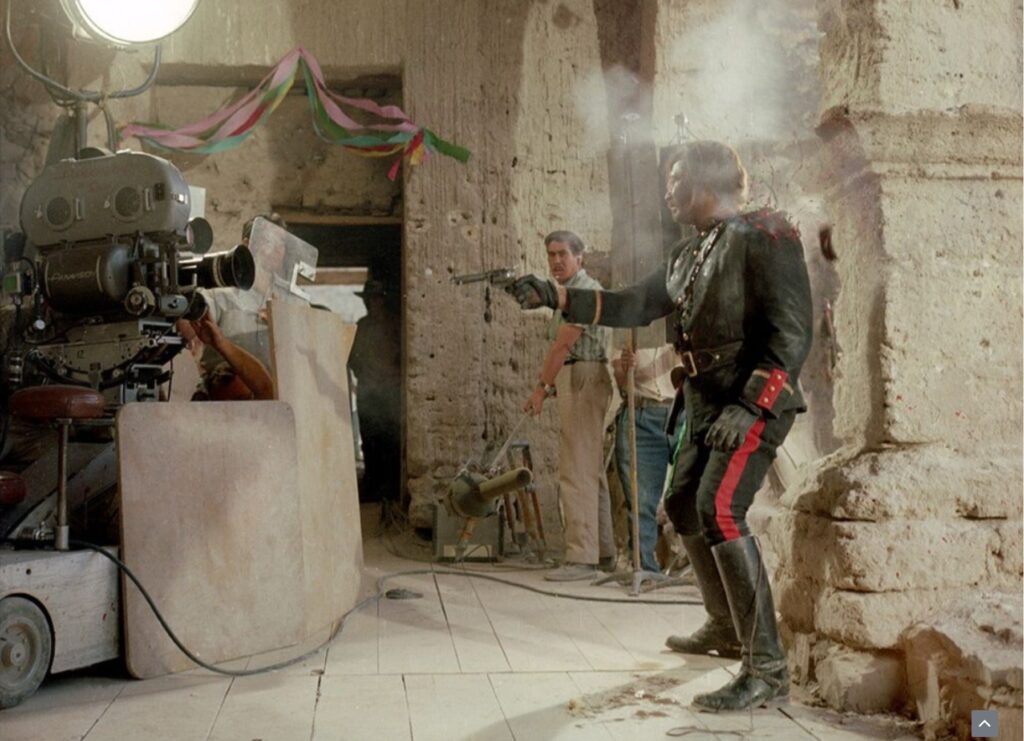
* Multi-Angle Coverage: Peckinpah famously used multiple cameras running at different frame rates (high speed for slow motion, standard speed, and sometimes undercranked for faster action) to film the action. The editor then cuts rapidly between these different speeds and angles (often five to ten cameras per setup), creating a distinctive, almost hallucinatory effect of action starting, stopping, and repeating from different perspectives.
* Slow Motion: The groundbreaking use of slow motion is used specifically to emphasize the horrific effects of the violence: bodies jerking, blood spattering (often using blood squibs), and the visceral impact of bullets. By slowing down moments of graphic violence, Peckinpah forces the audience to confront the reality of death, contrasting with the fast-paced, almost abstract nature of the rest of the cutting. This creates a shocking and elegiac rhythm to the carnage.
* Match-on-Action Cuts (or the deliberate lack thereof): While traditional Hollywood editing relies on match-on-action to smooth cuts, Peckinpah uses his fragmented montage to deliberately jar the audience, often cutting on violent action to a completely different angle or moment, intensifying the feeling of disorder.
Sound: Realism and Disharmony
The sound design is crucial in escalating the scene’s impact, working against traditional Western soundscapes.
* Diegetic Sound: The use of high-impact, realistic sound effects for the firearms (e.g., the booming shotgun blasts, the distinctive crack of rifle fire) avoids the often-sanitized sounds of earlier Westerns. The Wilhelm scream, a famous stock sound effect, is heard during the chaos, adding an ironic touch to the pervasive death.
* Sound Mix and Overlap: The sound mix is deliberately chaotic, with multiple gunshots, screams, and the clatter of horses and wagons layered over the Temperance Union’s singing of “Shall We Gather at the River.” This auditory dissonance reinforces the film’s core theme: the beautiful, religious ideal is violently obliterated by the ugly, chaotic reality.
* Music (Jerry Fielding): The score during the opening ride-in is foreboding and elegiac, underscoring the melancholy of the men and the impending doom. It cuts out during the gunfight, leaving only the brutal diegetic sound of the battle to dominate the soundscape, only to return with the gang’s grim, chaotic escape.
—————–
(*) Detailed Analysis: Editing—The Blend of Long and Short Cutting
The editing in the opening of The Wild Bunch, executed by Lou Lombardo under Sam Peckinpah’s direction, is defined by its calculated contrast between sustained, observational moments and hyper-kinetic bursts of violence. This creates a dramatic rhythmic shift that manipulates viewer perception and expectation.
The Long Cut: Sustaining Tension and Character
The initial ride into Starbuck and the moments leading up to the ambush are characterized by long takes and longer average shot lengths (ASL) compared to the ensuing shootout. This period of sustained cinematic time serves several key functions:
* Establishment and Exposition: Longer takes in wide shots and medium long shots allow the audience to absorb the Mise-en-Scène: the dusty town, the Temperance Union, the scorpions, and the stealthily positioned bounty hunters. The camera lingers on the faces of the Bunch and the townspeople, giving weight to their presence and future confrontation.
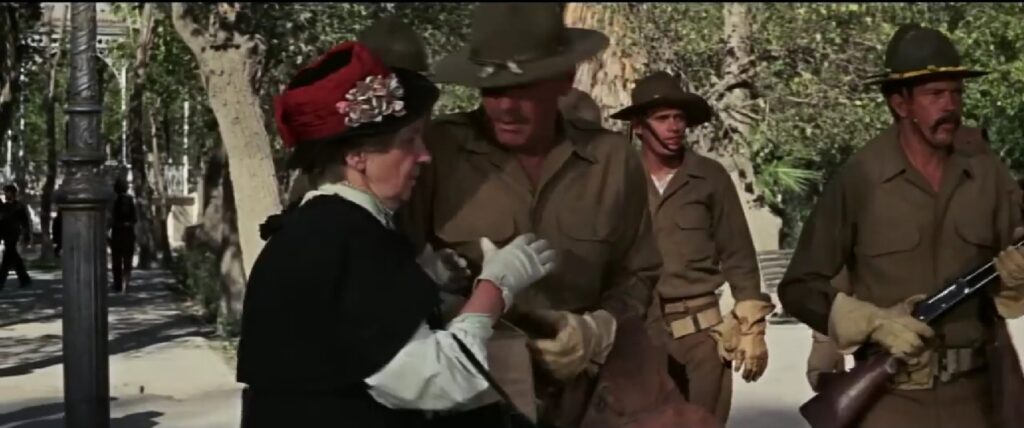
* The Soldier and the Old Woman: The brief but crucial interaction where Pike Bishop, disguised as a soldier, bumps into an old woman is a prime example of this deliberate pacing.
* Shot-Reverse-Shot Interplay (Subverted): While an immediate two-shot establishes the accidental bump, the subsequent cuts utilize the classic Shot-Reverse-Shot structure not for dialogue, but for a silent exchange of politeness and momentary humanity.
* Point of View (POV) and Perspective: The sequence alternates between:
Medium Shot/Two-Shot: Pike and the woman bumping.
Close-Up (CU) on Pike: He offers an apology, revealing his initial outward code of conduct and control.
CU on the Woman: She is flustered and accepting of the gentlemanly gesture, oblivious to his true nature.
Tracking Shot / Medium Shot: Pike escorts her a few steps. This is a moment of performed chivalry, utilizing a relatively long cut (2-3 seconds) to let the gesture play out and contrast with the murderous intent lurking beneath the uniform.
* Rhythmic Beat: The deliberate, slower rhythm of these few cuts provides a fleeting, almost false sense of normalcy and control. The politeness is jarring against the audience’s knowledge of the ambush and the brutal symbolism established by the scorpion scene. The slow pacing dramatically contrasts with the violence to follow, maximizing its impact.
The Short Cut: Kinetic Chaos and Disorientation
The moment the shooting begins, the editing shifts to an extreme rapid-fire montage.
* Kinetic Fragmentation: The ASL drops drastically (sometimes below 1 second) to create a staccato rhythm. The scene is fragmented into hundreds of tiny pieces, designed not for narrative clarity but for sensory impact. This technique forces the viewer into a state of perceptual overload, simulating the disorientation of being in a chaotic, deadly crossfire.
* Cross-Cutting and Simultaneity: Editor Lou Lombardo masterfully utilizes rapid cross-cutting between three different planes of action:
The Outlaws (The Bunch) on the ground.
The Bounty Hunters (Thornton’s men) on the rooftops (High-Angle).
The Innocent Civilians (The Temperance Union) caught in the middle. This constantly shifting spatial and POV perspective emphasizes the utter lack of control and the indiscriminate nature of the violence—no one can be tracked, and no one is safe.
* Action-Reaction and Temporal Manipulation: The short cuts are used to create a non-linear perception of time. A single gunshot is often followed by multiple, different reaction shots (a man falling in slow motion, a spray of blood, a shattered window) from various angles. Peckinpah and Lombardo use frame rate changes and rapid cutting to stretch and contract time within the same instant, making the moment of impact simultaneously fast, slow, and overwhelming. The short cuts function as visceral punctuation marks for the bullets’ impact.
In essence, the editing is a meticulously structured manipulation: the initial long cuts lull the audience into a false sense of classical Western pacing and observation, which is then violently shattered by the unprecedented speed and fragmentation of the short cuts, redefining the visual language of cinematic action.