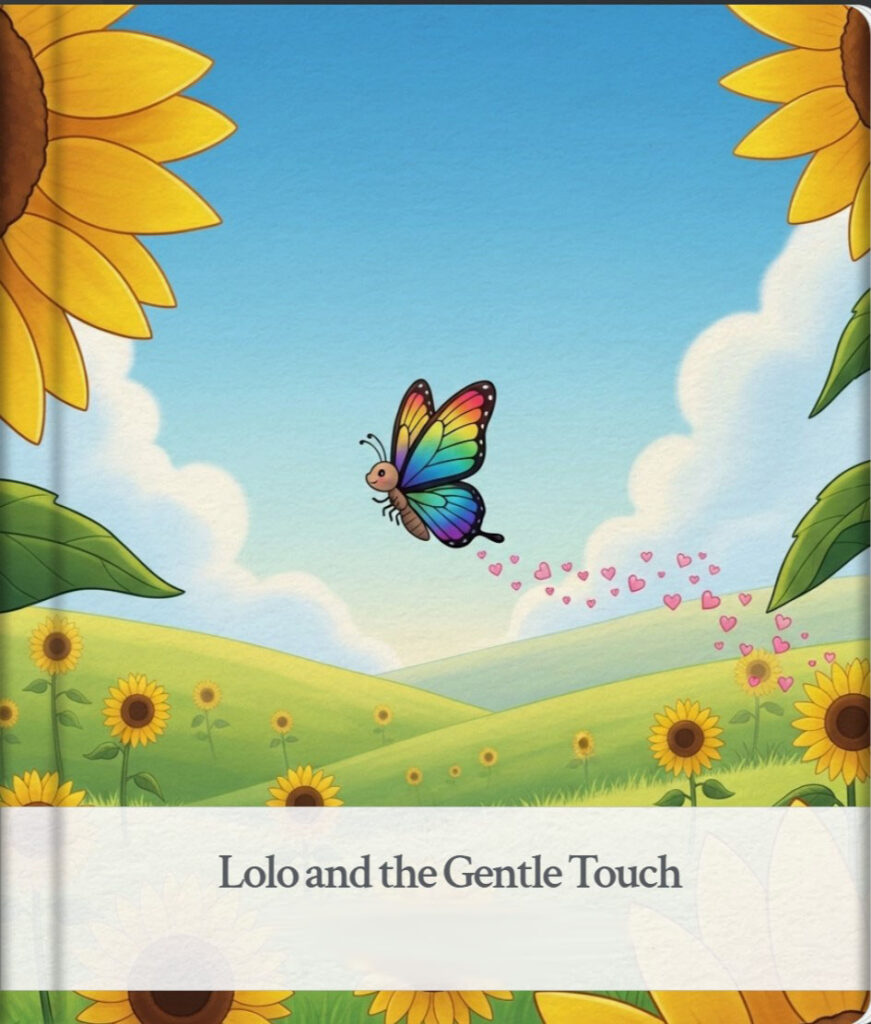
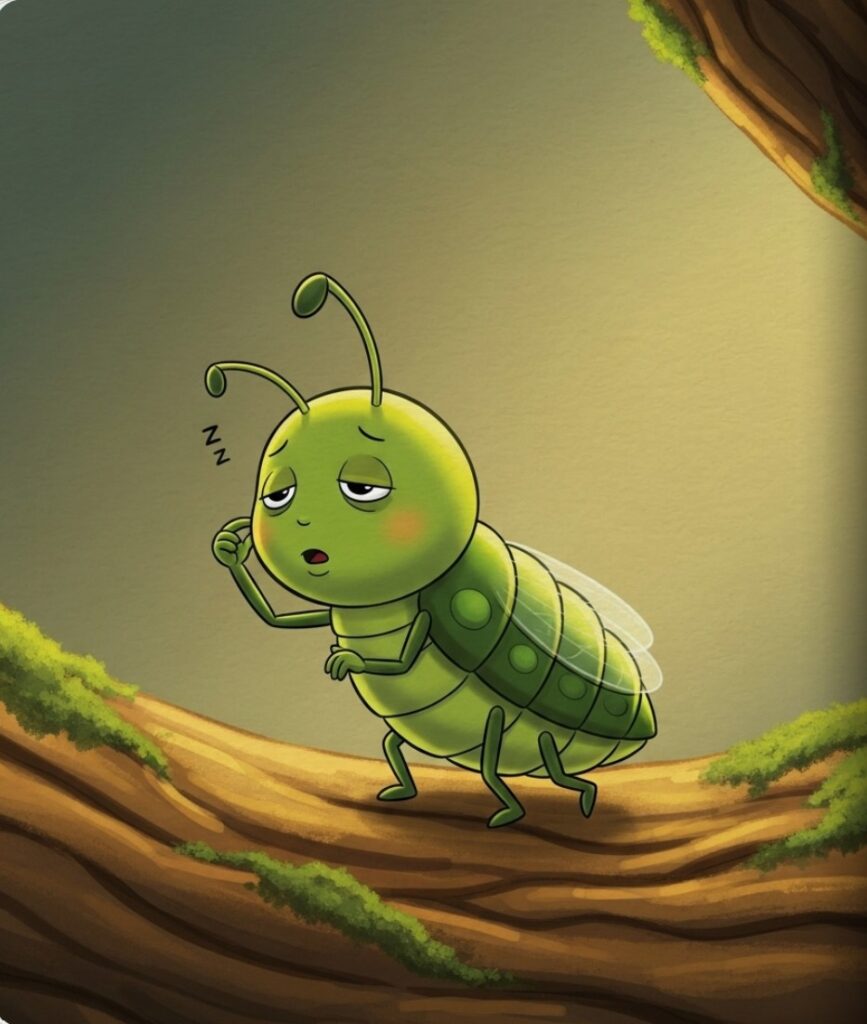
This is Lolo. Lolo was a very little, bright green caterpillar. Lolo loved to munch, munch, munch on big, juicy leaves.
One sunny afternoon, Lolo felt very sleepy. “Where can I rest?” Lolo wondered. Lolo wanted a soft, safe place to nap.
Lolo wriggled and wiggled until Lolo found a very special spot. It was near a big, gentle friend who sat very still and calm.
This kind friend was Lord Ganesh, the one with the big elephant head. Lord Ganesh looked warm and welcoming, holding a delicious sweet.
Lolo looked up at Lord Ganesh’s big, round tummy. Lolo thought, “That looks like the softest pillow!” Lolo gently rubbed the tummy, ‘Pffffft,’ just once.
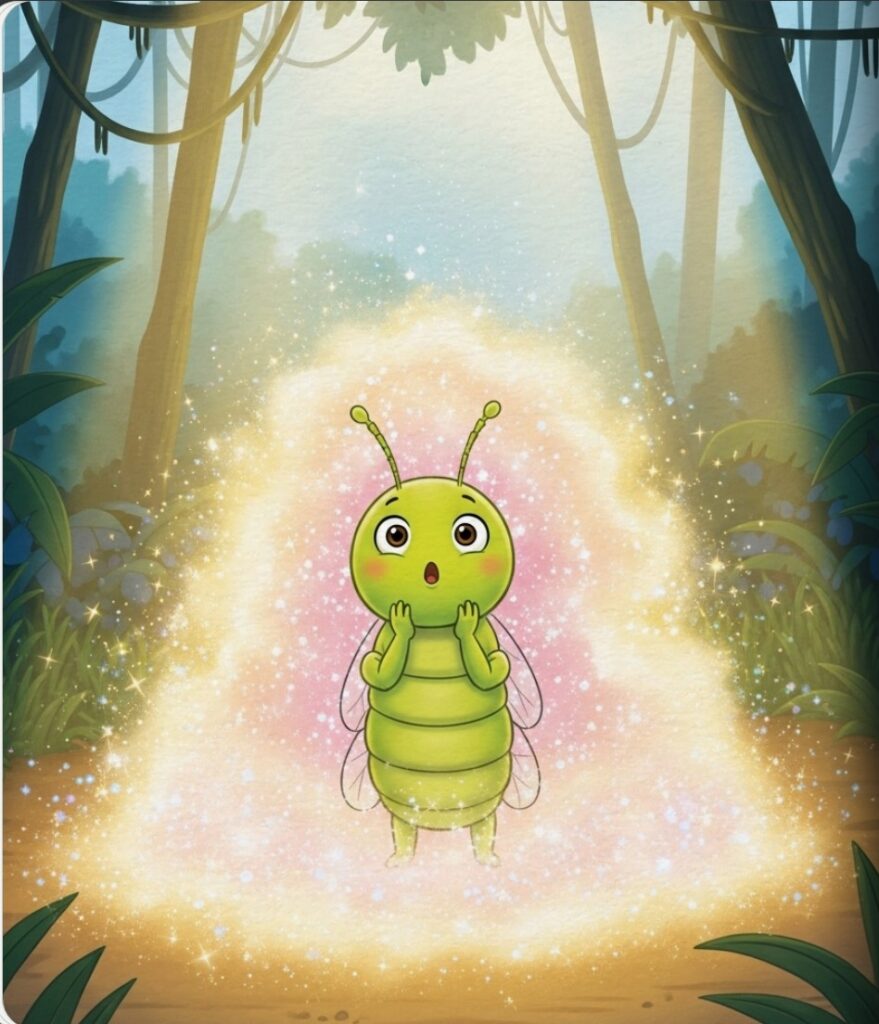
Suddenly, a wonderful tiny sparkle glowed all around Lolo! It was warm, bright magic that felt like a soft, sweet hug.
The glow faded, and what appeared was not Lolo the butterfly flew out into the big, wide world. Wherever Lolo went, Lolo spread love and compassion, like little sprinkles of fairy dust.
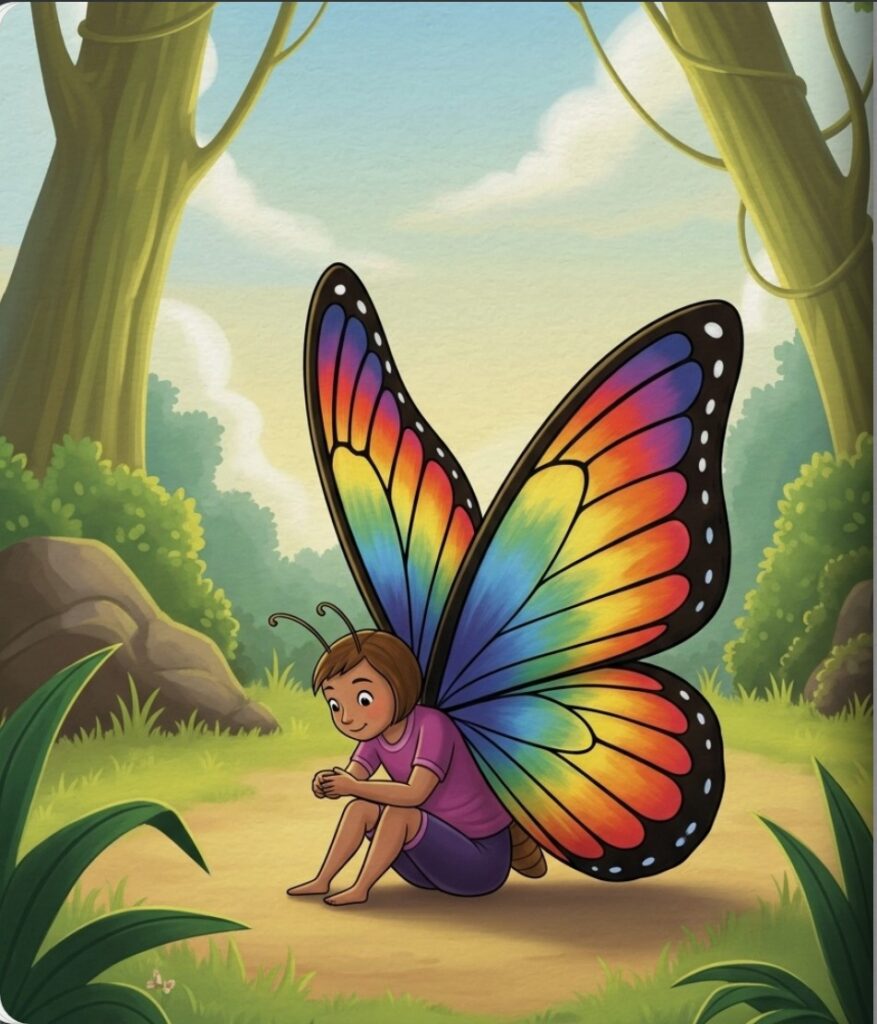
Lolo the caterpillar! It was Lolo the beautiful butterfly! Lolo had rainbow wings!
Lolo’s new wings felt light and strong. Lolo fluttered up and gave Lord Ganesh a happy wink. “Thank you for the kindness!”
Lolo the butterfly flew out into the big, wide world. Wherever Lolo went, Lolo spread love and compassion, like little sprinkles of fairy dust.
Lolo waved wings at the buzzing bees and smiled at the sleepy ladybugs. Everyone felt happy because Lolo shared gentle, soft love with the world!
Porcelain skin. A white bra strap cutting across a fragile back. The neck is long and exposed, crowned by that famous dark pixie cut. Her posture suggests a heavy heart; a lovely, lonely silhouette.
RACK FOCUS:
IN THE MIRROR: The focus shifts. We find her eyes.
THE STAR ACTRESS. She scrutinizes herself, seeing only flaws in a face the world will one day worship. She searches her reflection for confidence, but finds only a young woman who feels small in a very large world.
Created by Henrik Frederiksen [Founder ElephantTribe.org] using Google Gemini VEO 3
This article focuses on how the high degree of neuroplasticity in the young brain can be optimally harnessed to develop essential skills for a lifetime of thinking, problem-solving, and emotional regulation. By incorporating a structured “Yoga Program for Toddlers: Fostering Proprioception and Body Awareness,” we can enhance the neural foundation for these complex abilities.
The Plastic Brain: A Period of Unrivaled Potential
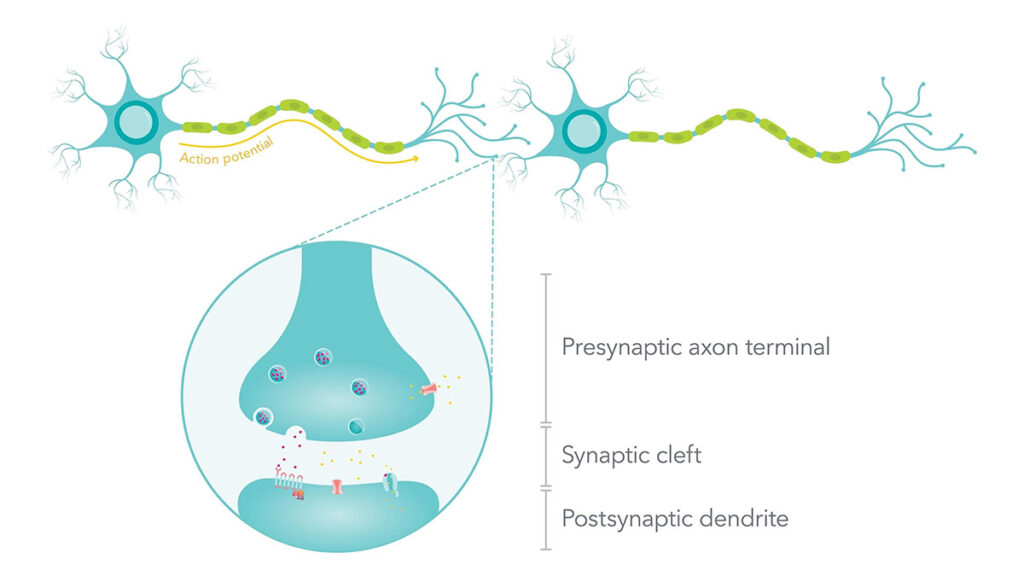
The young brain is a powerhouse of change, undergoing synaptogenesis (the rapid creation of connections) followed by synaptic pruning (the refinement of those connections based on experience). This experience-driven efficiency is what makes early childhood the “window of opportunity” for building robust cognitive and emotional skills.
Shutterstock
💡 Vygotsky’s Sociocultural Theory: The Social Scaffolding of Thought
The work of Lev Vygotsky highlights that higher-order cognitive functions—including critical thinking and problem-solving—are socially constructed. Interactions with a More Knowledgeable Other (MKO) who provides scaffolding within the Zone of Proximal Development (ZPD) drive the formation of the sophisticated neural networks required for critical analysis. Through yoga, an MKO can model poses and verbal cues (“Now put your hand next to your foot!”), challenging the child’s motor and cognitive skills just beyond their independent reach.
🎭 Jungian Archetypes and Emotional Regulation: Shaping the Inner World
Carl Jung’s theories underscore the importance of shaping the inner emotional landscape for self-regulation and emotional intelligence. The process of individuation—developing a unified sense of Self—is fostered by an emotionally safe environment that validates all feelings. Yoga provides a structured way to practice emotional integration, linking physical sensations with breath and conscious movement, which strengthens the neural connections between the emotional centers and the prefrontal cortex for better inhibitory control.
🧘♂️ The Neuroplastic Benefits of Toddler Yoga
A “Yoga Program for Toddlers” directly stimulates and strengthens the neural pathways necessary for superior cognitive and emotional function, primarily through the development of proprioception and body awareness.
Benefit
How It Works (Neuroplastic Mechanism)
Resulting High-Level Skill
Enhanced Proprioception
Proprioception is the “sixth sense”—the body’s awareness of its position and movement in space. Yoga poses (e.g., Tree Pose, Downward Dog) provide intense sensory feedback to the brain regarding muscle stretch, joint angle, and balance. This repetition strengthens and refines sensory-motor pathways in the cerebellum and parietal lobe.
Improved Focus and Concentration: When the brain receives clear body-position data, it spends less energy monitoring the body, freeing up resources for complex critical thinking and executive function.
Improved Body Awareness/Schema
Linking movement with conscious instruction (“Stretch up to the sky,” “Be a quiet mouse”) helps build a comprehensive body schema (the neural map of the body). This process requires the integration of multiple sensory inputs (visual, tactile, proprioceptive).
Better Emotional Regulation: A stronger body-mind connection allows children to recognize and label internal states (e.g., “I feel tight/tense”) earlier, giving them a foundation for self-regulation techniques like deep breathing before an emotion escalates.
Increased Cross-Lateral Coordination
Movements that cross the midline (e.g., reaching the right hand to the left foot) require rapid communication and coordination between the brain’s left and right hemispheres (via the corpus callosum).
Enhanced Problem-Solving: Strengthened inter-hemispheric communication is vital for complex tasks requiring both analytical (left) and creative/spatial (right) reasoning, boosting overall cognitive flexibility.
Mindful Breathing and Pausing
Integrating conscious breathing with movement (e.g., breathing in as you reach up) helps activate the parasympathetic nervous system (rest and digest). This controlled practice reinforces the neural control over automatic stress responses.
Resilience and Stress Management: The ability to intentionally calm the nervous system is the core of emotional regulation, teaching the child a physical coping mechanism that they can rely on for a lifetime of managing stress and adapting to challenges.
By weaving together structured, mindful physical activity with social interaction and emotional validation, a toddler yoga program acts as a powerful, direct intervention in harnessing neuroplasticity. It doesn’t just teach children to balance on one leg; it helps them build the stable, integrated neural architecture necessary to be a thoughtful, emotionally balanced, and proficient problem-solver.
* Developed with the assistance of Gemini.ai by Henrik Frederiksen [Founder ElephantTribe.org and Elizabeth Jackson [Gyrokinesis® Master Trainer – Gyrotonic® Master Trainer – Yoga For Dancers – Yamuna Body Rolling™ – Classical Pilates]
Pip the bird found a tiny, round seed. “What a perfect seed!” he chirped. He dropped it gently on the soft, brown earth and flew away.
Along came Hopper the rabbit, twitching his long nose. Wiggle, wiggle, sniff! He saw the tiny seed all by itself. “This seed needs a cozy bed!” he said.
Hopper used his soft paws to dig a little hole. Pat, pat, pat. He tucked the seed inside and gave it a little drink of water from a big leaf. “Sleep tight, little seed,” he whispered.
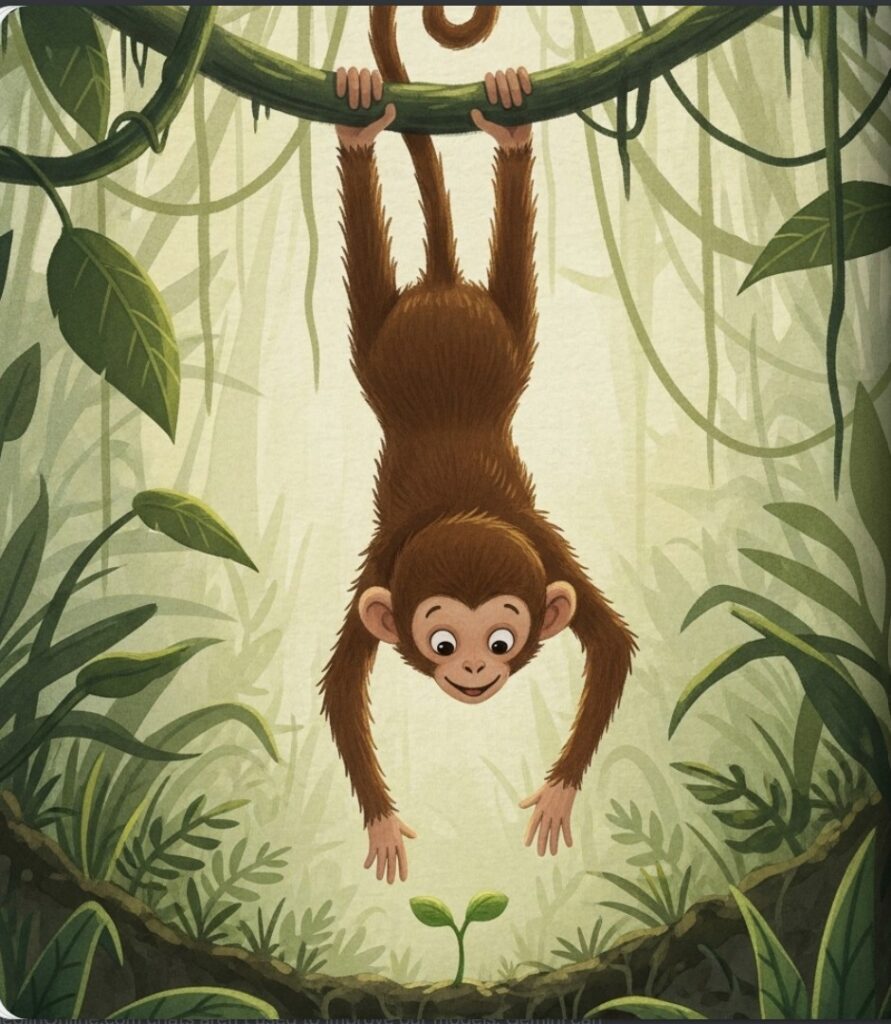
Soon, a little green sprout poked its head out of the ground! Jojo the monkey saw it while swinging from a vine. “Ooh! A new friend!” he chattered happily.
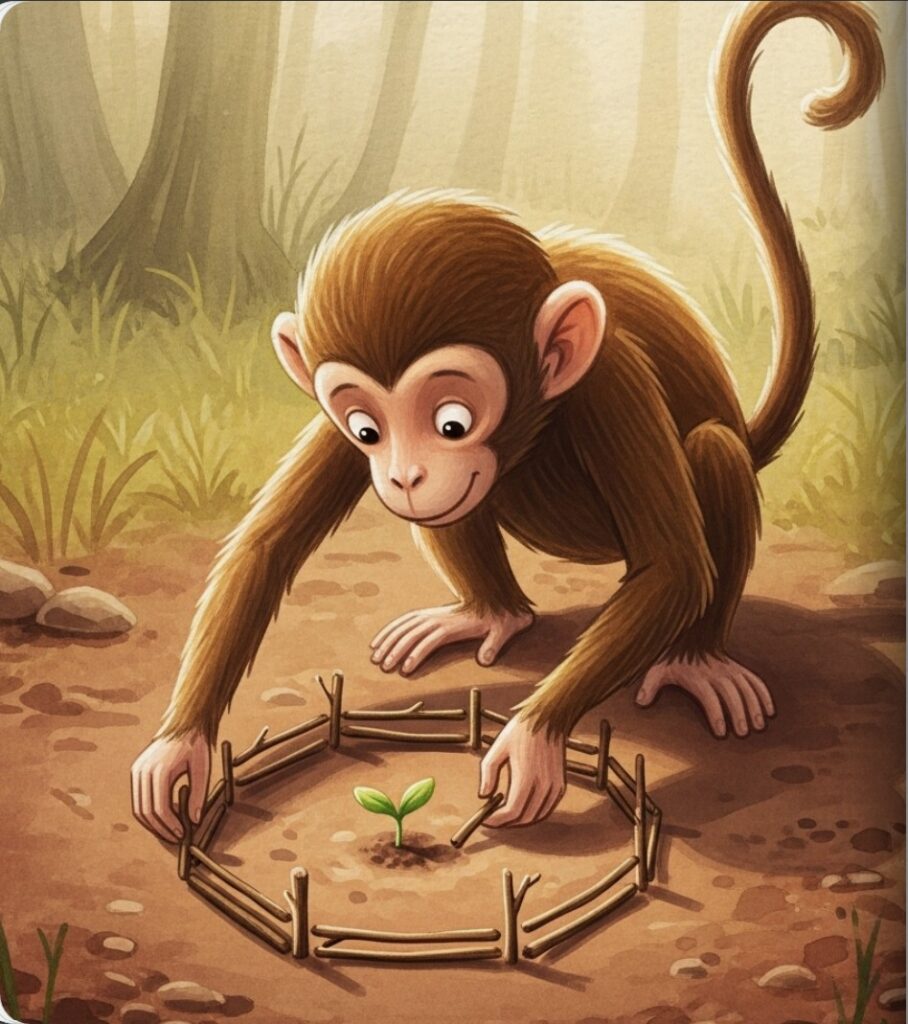
Jojo gathered little twigs and built a tiny fence all around the sprout. “I’ll keep you safe from big clumsy feet,” he said, patting the last twig into place.
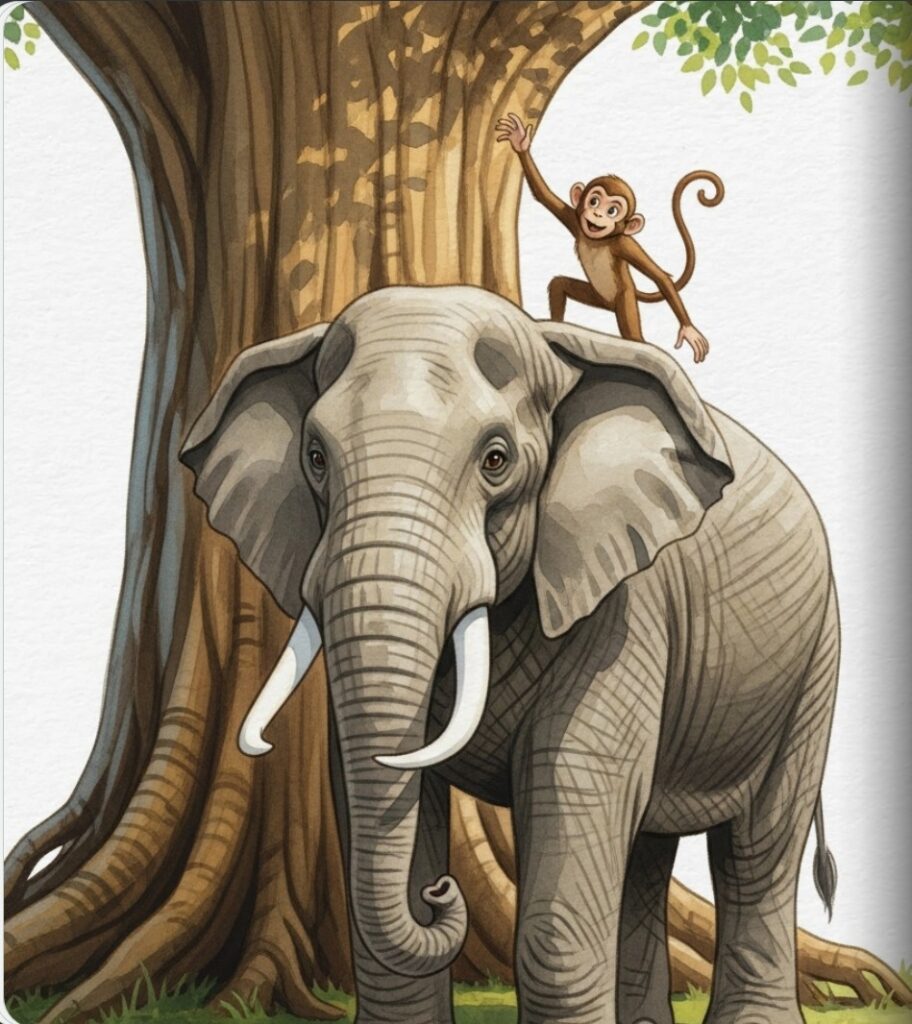
The little plant grew taller, but the sun was very hot, and it was thirsty. Rumble the elephant came by with a slow, heavy tread. Thump, thump, thump. “You look thirsty,” he rumbled in his big, kind voice.
Rumble filled his long trunk with cool water from a bubbling spring. SWOOSH! He gently sprayed the plant like a little rain shower. The plant perked right up!
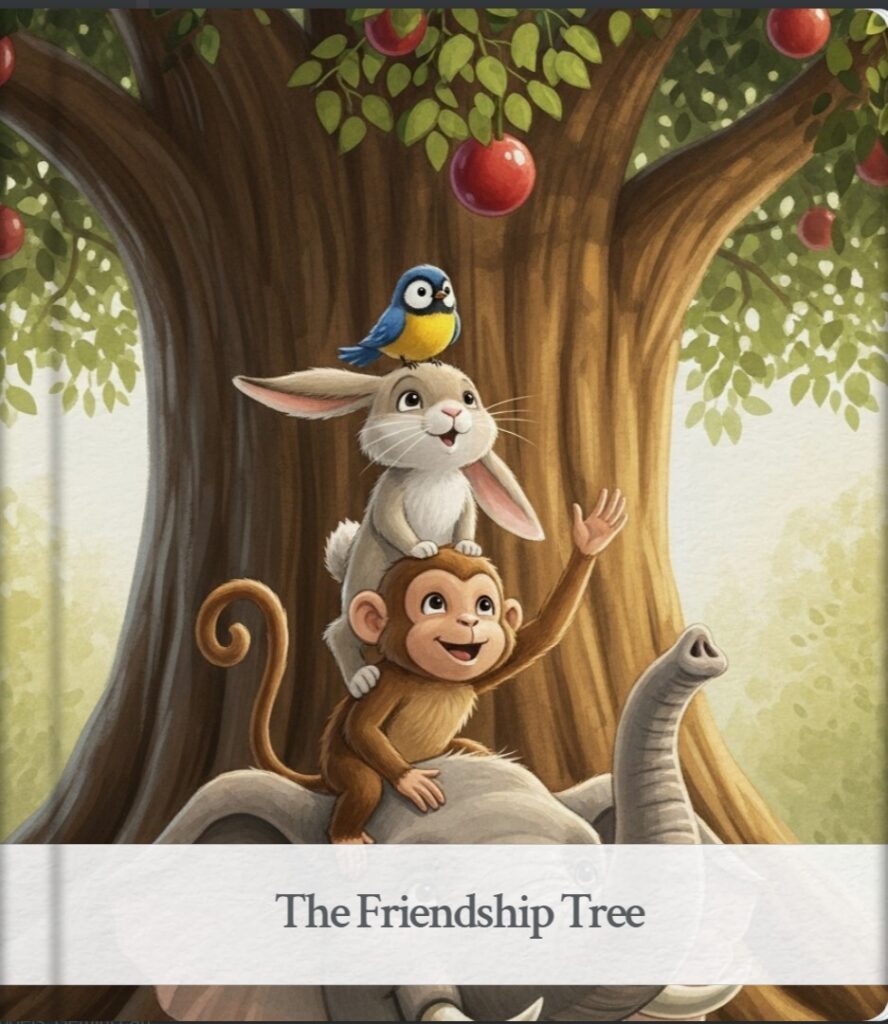
The little plant grew and grew until it was a BIG, beautiful tree with sweet, red fruits! But the fruit was way, way up high. “Oh my,” chirped Pip. “It’s too high to reach!”
“I have an idea!” rumbled Rumble. “We can work together!” Rumble stood steady and strong next to the tree. “Climb on my back, Jojo!” Jojo the monkey scrambled right up.
Then, Hopper hopped onto Jojo’s shoulders, and Pip the bird flew to the very top! He picked a yummy fruit and dropped it down for everyone. They all sat together and shared the delicious treat. “Hooray for friends!” They cheered.
Neuroplasticity, the brain’s remarkable ability to change, adapt, and form new neural connections, is the biological engine driving early childhood development. It is during this critical period that the neural architecture for a lifetime of thinking, problem-solving, and emotional regulation is established. While genetics provide the blueprint, the child’s rich environment and social interactions are the primary sculptors, a process illuminated by the convergence of developmental psychology and neuroscience.
The Plastic Brain: A Period of Unrivaled Potential
The young brain operates in a state of “exuberant synaptogenesis,” creating an extraordinary number of new synapses—more connections, in fact, than an adult brain. This highly dense network is then refined by experience through synaptic pruning, where frequently used pathways are strengthened and unused ones are eliminated. This experience-driven efficiency is what makes early childhood the “window of opportunity” for building robust cognitive and emotional skills.
Optimal skill formation for critical thinking, complex problem-solving, and sound emotional regulation requires the strengthening of specific, high-level neural networks.
💡 Vygotsky’s Sociocultural Theory: The Social Scaffolding of Thought
The work of developmental psychologist Lev Vygotsky offers a crucial framework for understanding how neuroplasticity is leveraged for optimal cognitive development. Vygotsky argued that higher-order cognitive functions—including critical thinking and problem-solving—are not developed in isolation but are socially constructed.
* The More Knowledgeable Other (MKO): Vygotsky posited that children learn through interactions with an MKO (e.g., parent, teacher, older peer) who models complex skills and language. This interaction drives the formation of the sophisticated neural networks required for critical analysis.
* The Zone of Proximal Development (ZPD): The ZPD is the space between what a child can achieve independently and what they can achieve with guidance. Engaging a child within this zone—providing just enough support or “scaffolding”—maximizes the brain’s plasticity by challenging it to form new, more complex connections needed to internalize the skill. For critical thinking, this means engaging in dialogues, asking “why,” and encouraging imaginative problem-solving before the child can fully articulate the solution alone.
* Language as a Tool: For Vygotsky, language is the primary tool for thought. Rich, complex verbal engagement in early childhood strengthens the neural circuits associated with executive function and logical reasoning, which are prerequisites for adult-level critical thinking.
🎭 Jungian Archetypes and Emotional Regulation: Shaping the Inner World
While Vygotsky addresses the outward, cognitive scaffolding, the theories of Carl Jung provide insight into the shaping of the child’s inner emotional and psychological landscape, which is fundamental to self-regulation and emotional intelligence—key components of effective problem-solving.
Emotional regulation, the ability to manage one’s emotional state to achieve goals, is heavily dependent on the development of the prefrontal cortex, a process highly influenced by early experiences.
* The Self and Individuation: Jung’s concept of individuation—the process of becoming a unified, whole individual—begins in childhood. A nurturing environment that supports a child’s unique emotional and behavioral expressions without excessive judgment fosters the formation of a resilient sense of Self. This emotional security is neurologically linked to the stability of the limbic system, allowing the prefrontal cortex to develop the necessary inhibitory control over emotional impulses.
* Shadow and Integration: The Shadow represents the repressed, unacknowledged aspects of the personality. When caregivers create a safe space for children to express “negative” emotions (anger, fear, frustration), the child learns to integrate these feelings rather than repressing them. This active, conscious processing strengthens the neural connections between the emotional centers and the logical reasoning centers, preventing emotional outbursts from overwhelming critical thought processes later in life. A child who can process complex emotions is better equipped to handle ambiguity and stress—essential for advanced problem-solving.
🎯 The Convergence: A Blueprint for Optimal Development
The synergy between neuroplasticity, Vygotsky’s MKO, and Jung’s Individuation forms a powerful blueprint for optimizing cognitive and emotional growth:
Enrichment and Challenge: Caregivers must provide a rich, language-dense, and challenging environment that operates just within the child’s ZPD. This activity forces the young brain to stretch and strengthen the neural pathways associated with higher-order functions.
Emotional Safety and Integration: Create an emotionally secure environment where all facets of the child’s emotional experience are validated. This support stabilizes the emotional brain, freeing up energy for the development of the prefrontal circuits necessary for executive function, critical analysis, and wise decision-making.
Modeling and Internalization: By acting as the MKO in both cognitive and emotional domains (e.g., modeling logical reasoning for a puzzle and modeling calm emotional processing after a disappointment), adults provide the template for the child’s brain to internalize the complex skills required for a lifetime of effective thinking and self-regulation.
By recognizing early childhood as a period of profound neural malleability and applying the wisdom of developmental theories, we can ensure the brain’s plasticity is harnessed to build not just knowledge, but the capacity for deep, critical, and emotionally intelligent thought.
Created by Henrik Frederiksen [founder ElephantTribe.org] with the assistance of Gemini AI.
In the middle of a big, bright world, there grew a wonderful tree. This special tree was named the “Tree of Life”. Its branches reached up to the sun, and they were filled with all kinds of fruit.
On a branch lived a little blue bird named Pip. Pip loved to eat the fruit from the tree. All day long he would hop and peck, tasting every fruit he could find.
First, Pip ate a sweet red fruit. “Yummy!” he chirped. “This is the best! I feel so happy!” He flapped his little wings and did a happy dance on the branch.
Next, Pip tried a sour green fruit. “Oh, yucky!” he peeped. His beak puckered up, and he felt very, very sad. A little tear rolled down his fluffy cheek.
As Pip sniffled, he looked up, up, up to the very top of the tree. There sat another bird. He was big and golden and very quiet. His name was Sky.
Sky wasn’t eating any fruit. He wasn’t happy or sad. He just looked peaceful. Pip looked at his sour fruit, and then back up at quiet Sky. He wanted to feel peaceful, too.
So, Pip tried to be like Sky. He stopped thinking about the fruit. He fluffed his feathers, closed his eyes, and sat very, very still on his branch.
It felt nice to be so quiet. A little wiggle of peace started in his toes and went all the way to his beak. “I will fly up to Sky,” he decided.
Up, up, up Pip flew, past the green fruits and the red fruits, all the way to the top branch. He landed softly right next to big, golden Sky.
Sitting next to Sky, Pip didn’t feel happy or sad anymore. He just felt big and quiet and peaceful, just like Sky. It felt like they were two feathers on the very same bird.